

Grace in Decay 落椿
/ Flowers
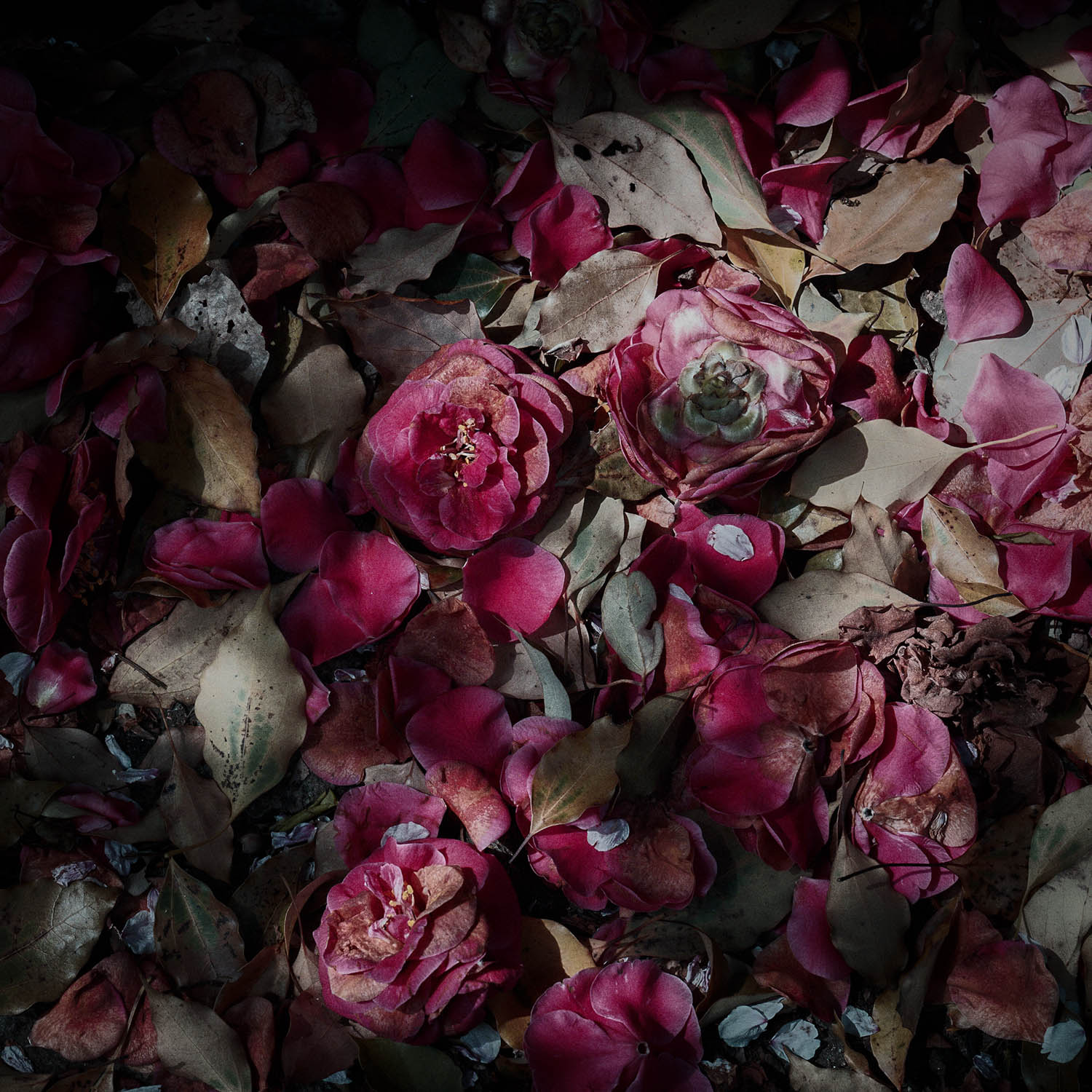
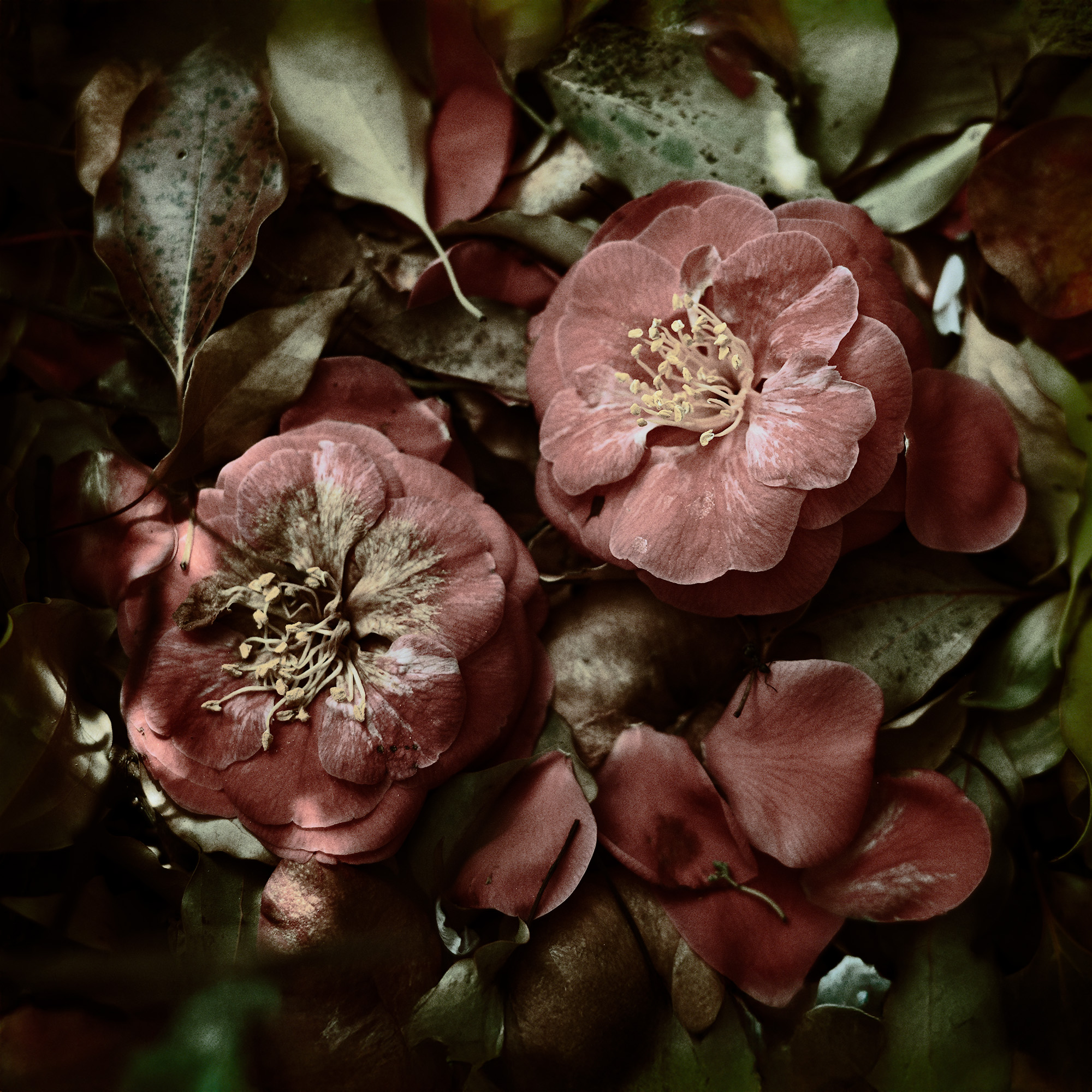
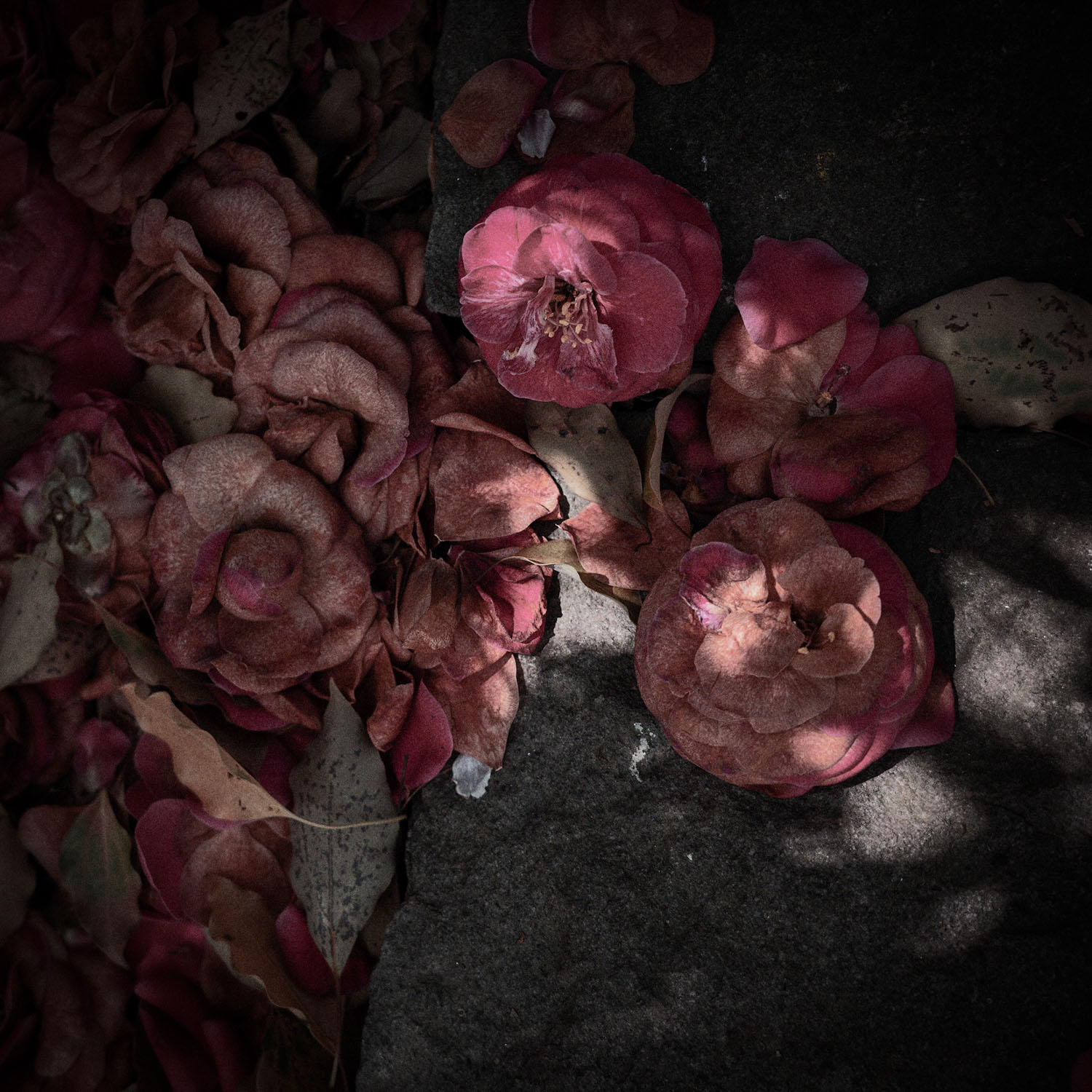
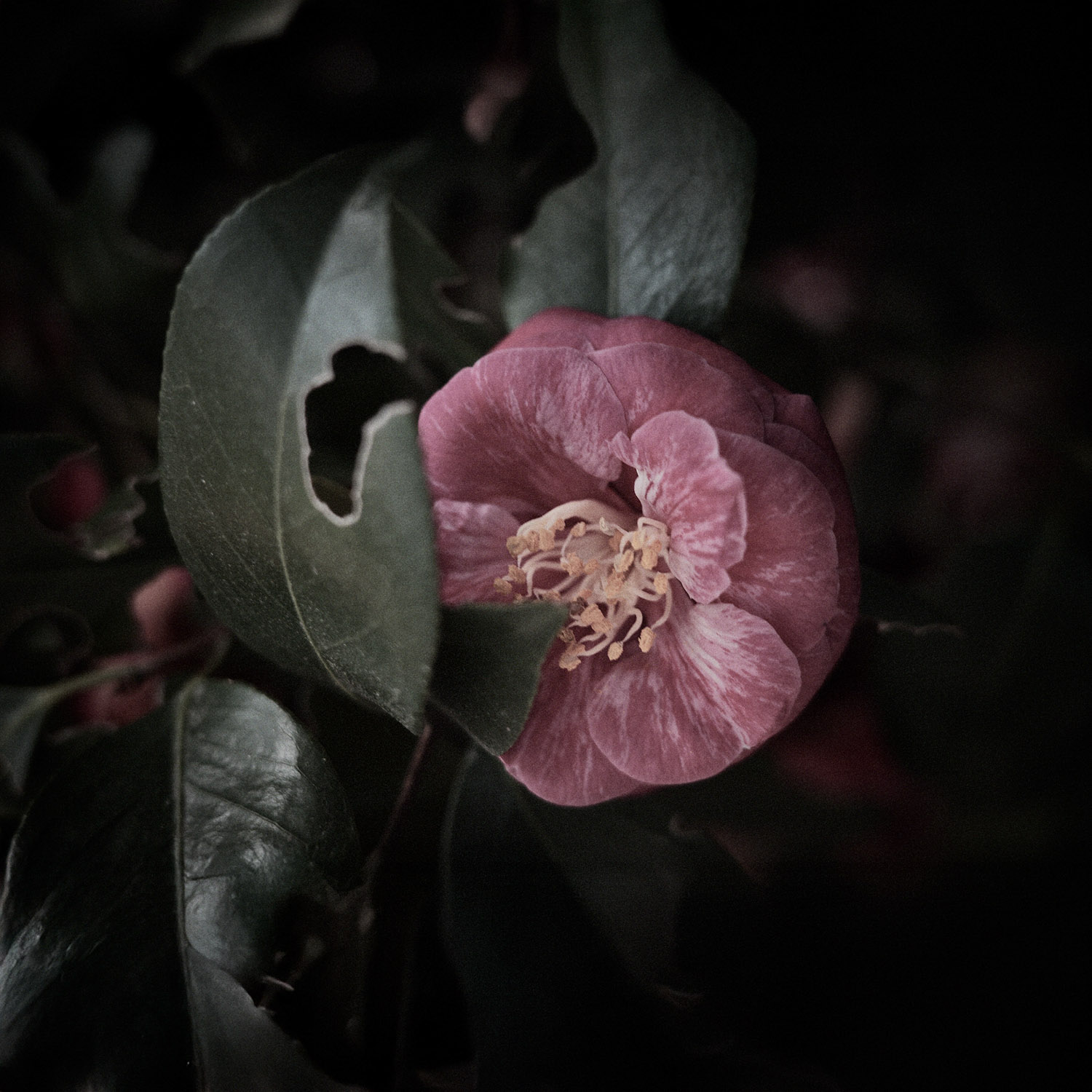
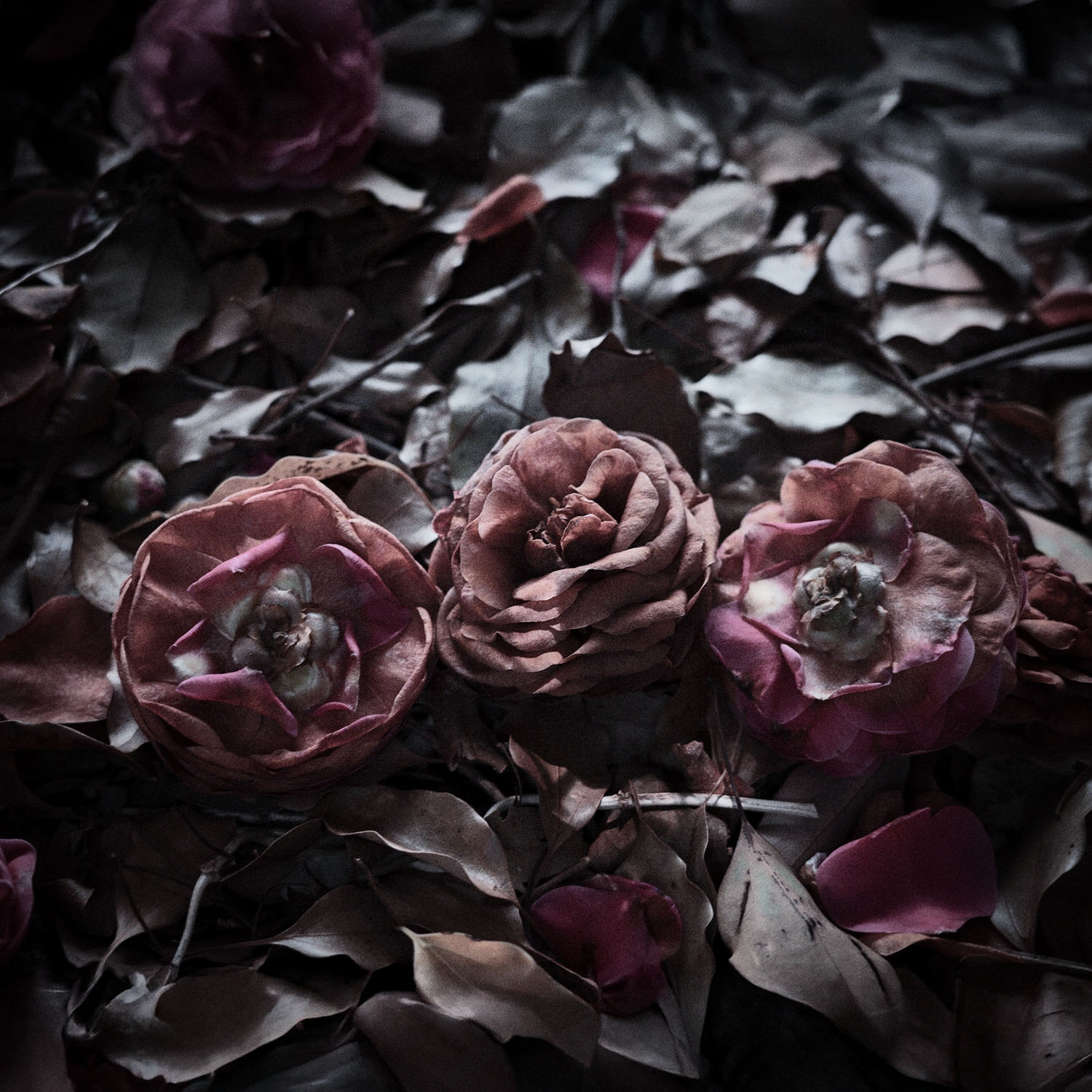
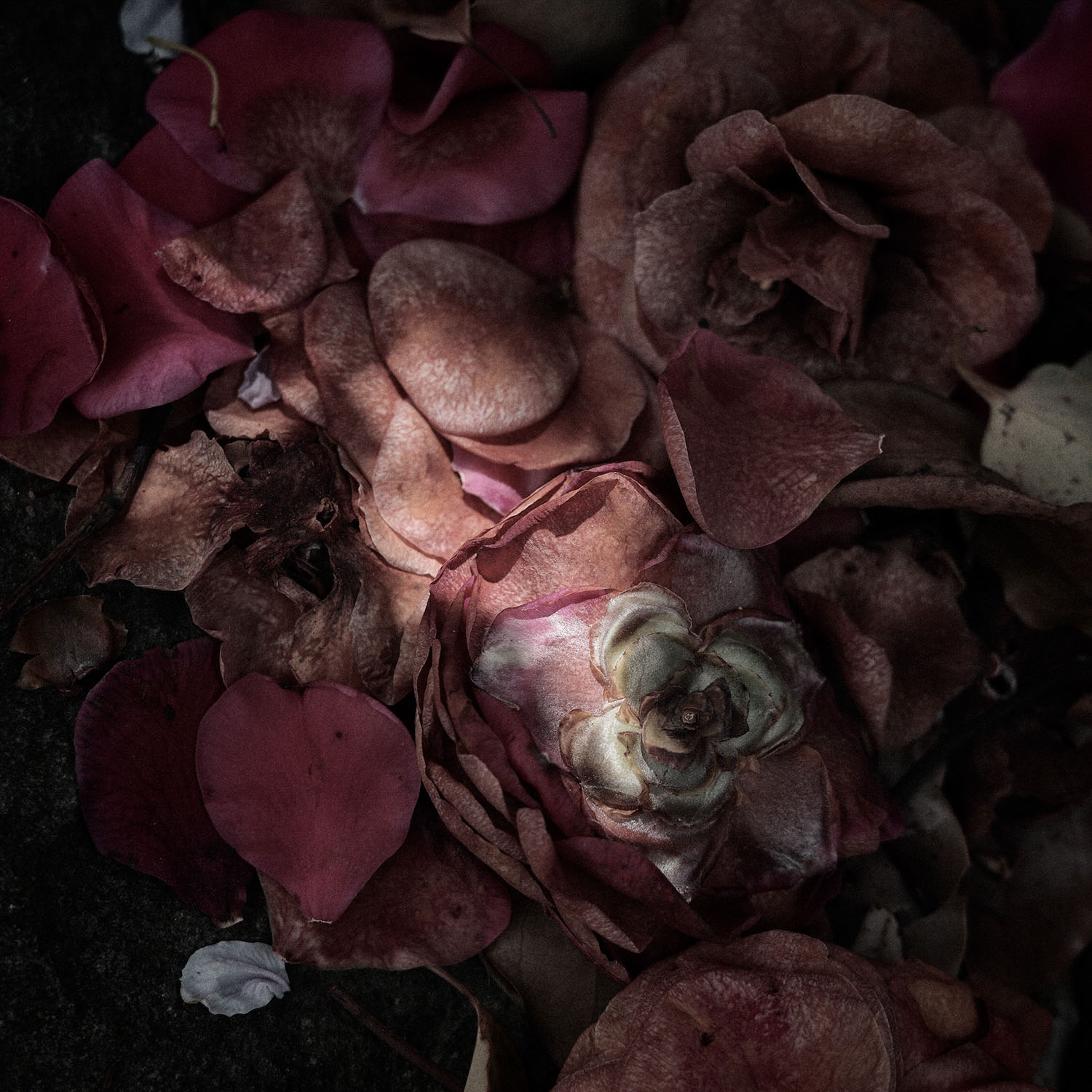
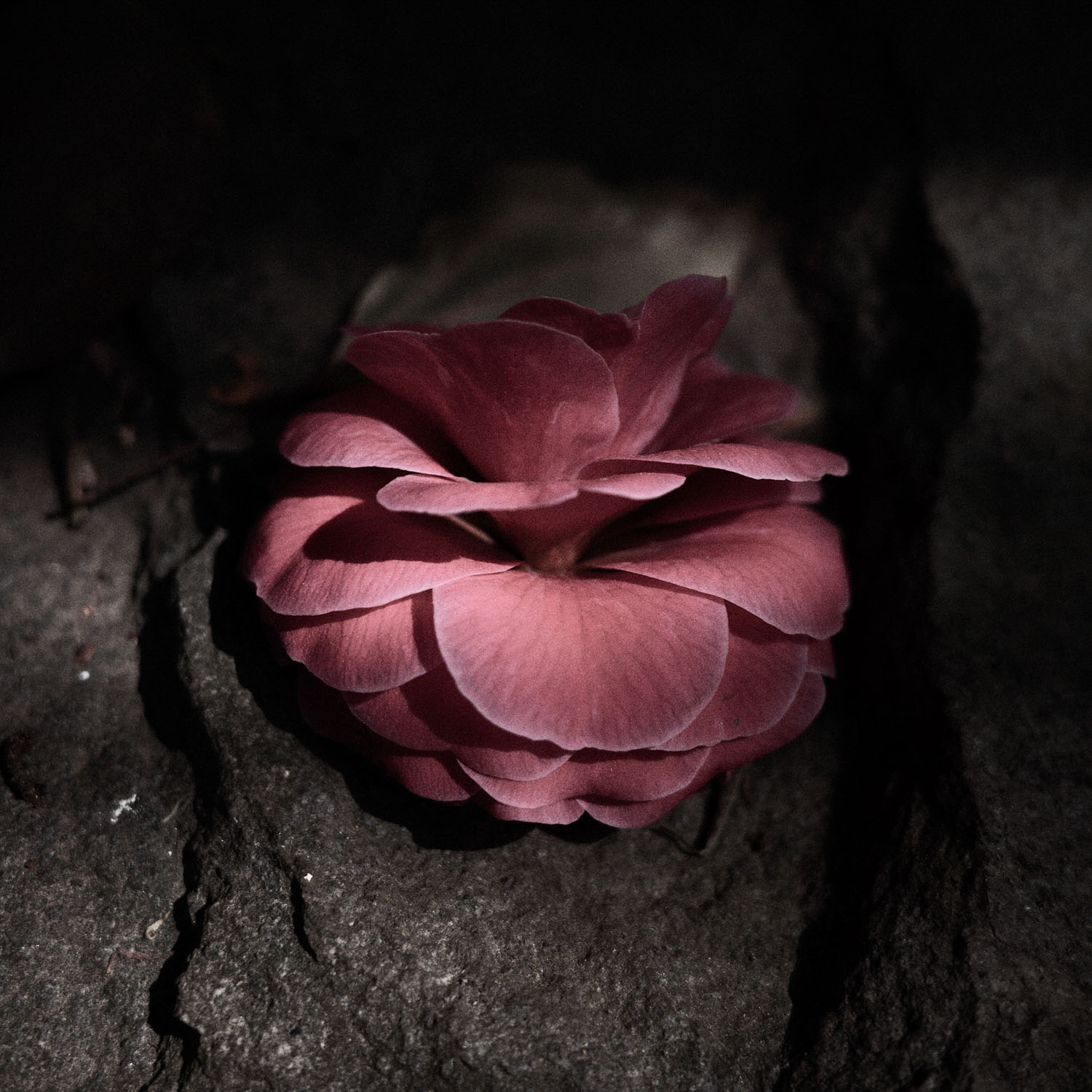
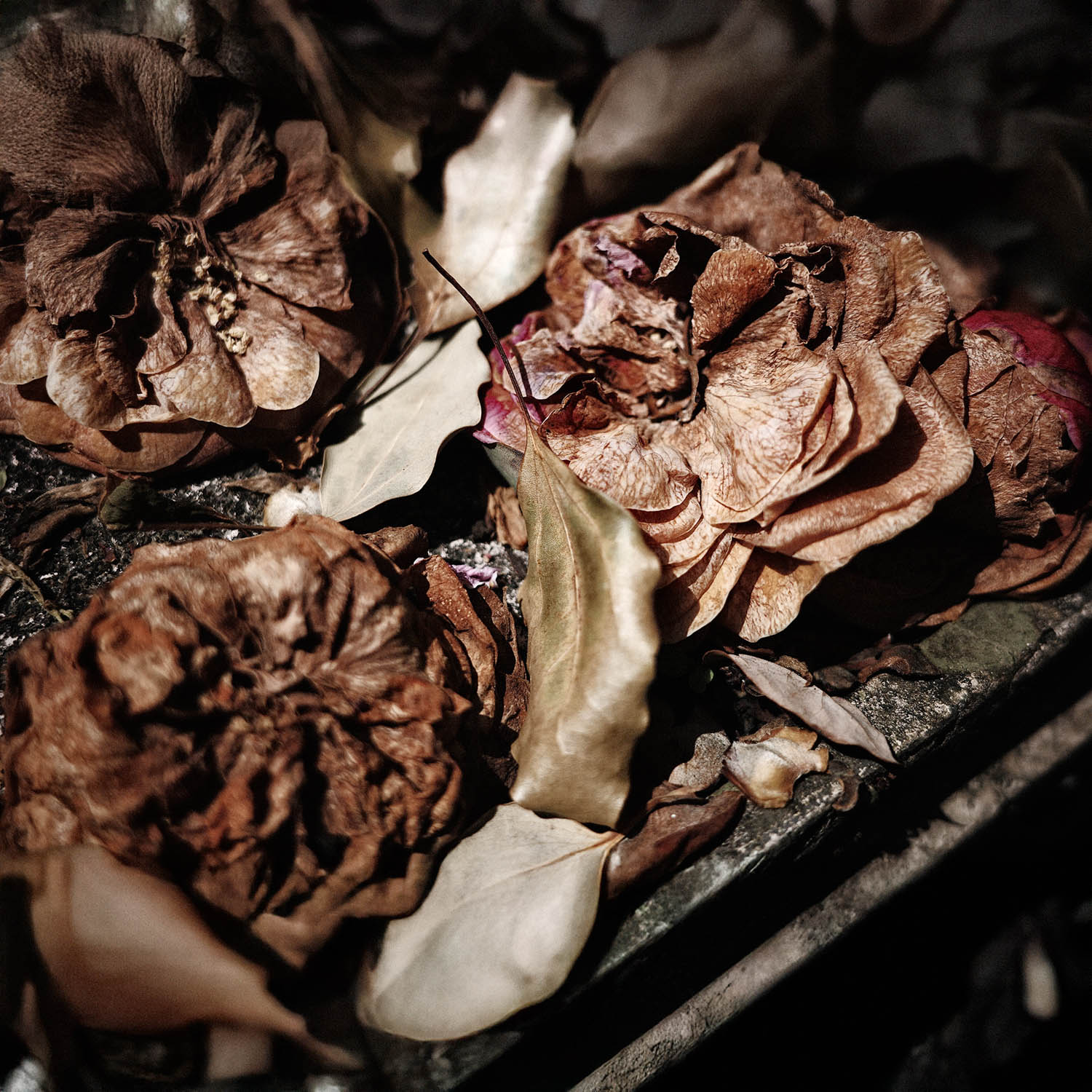
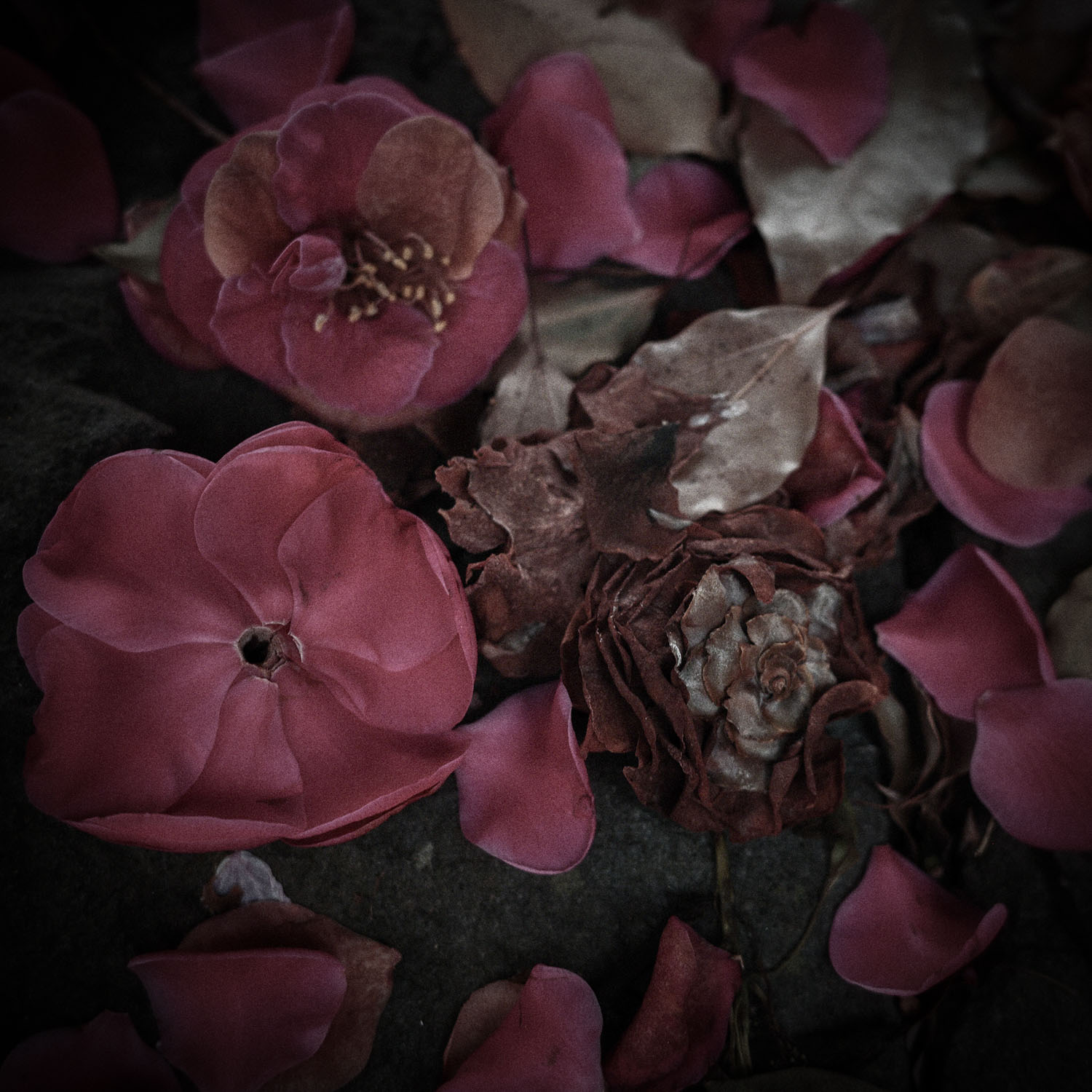
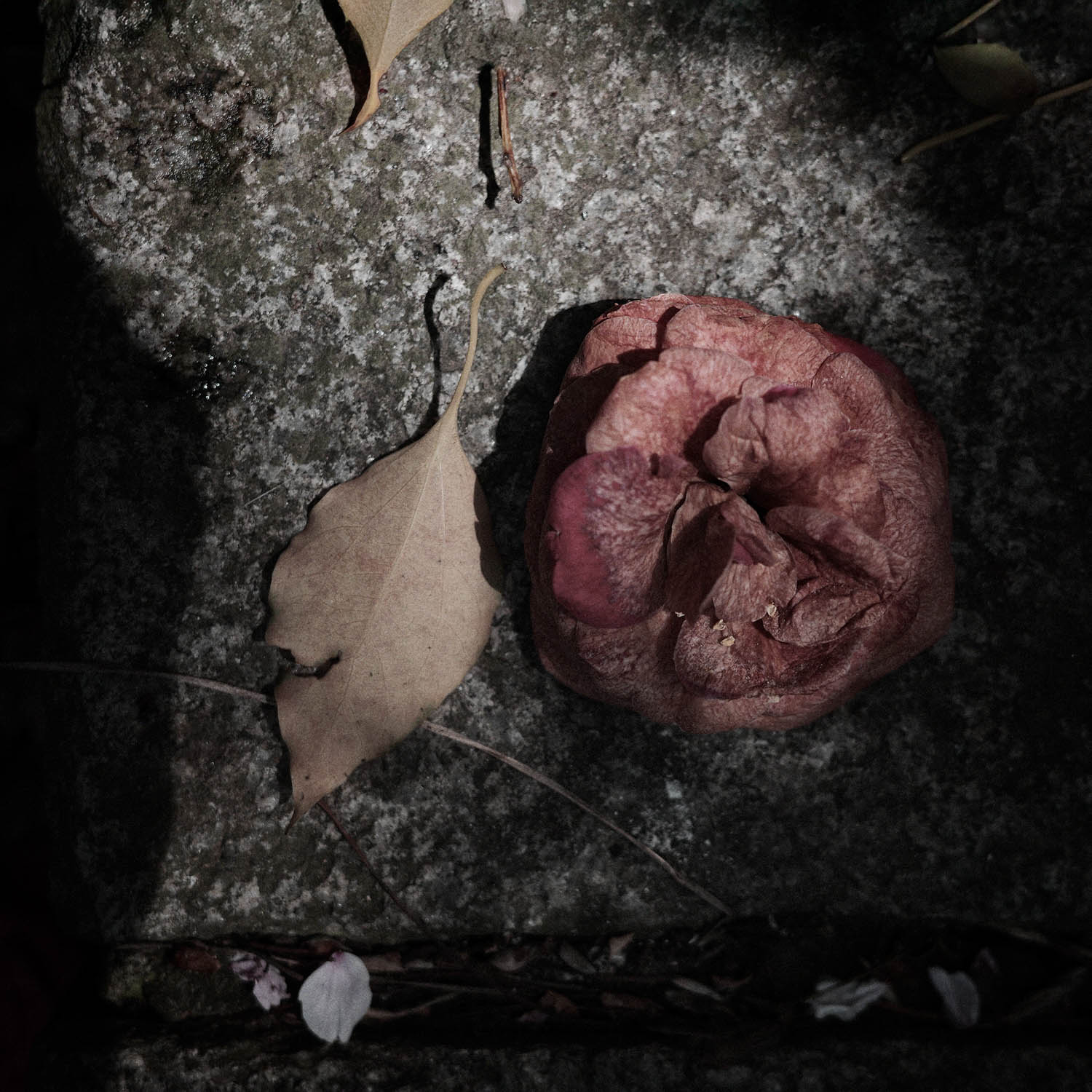
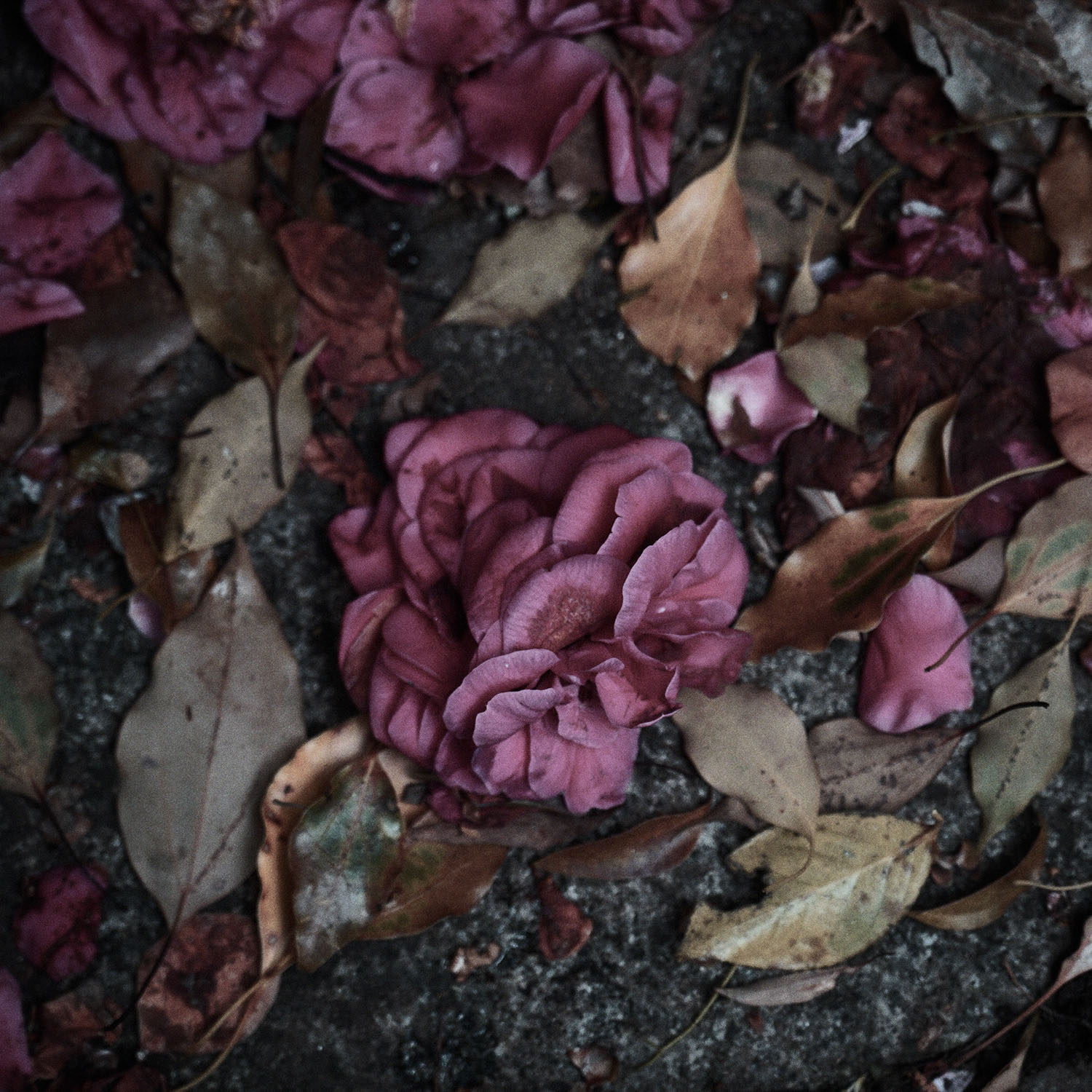
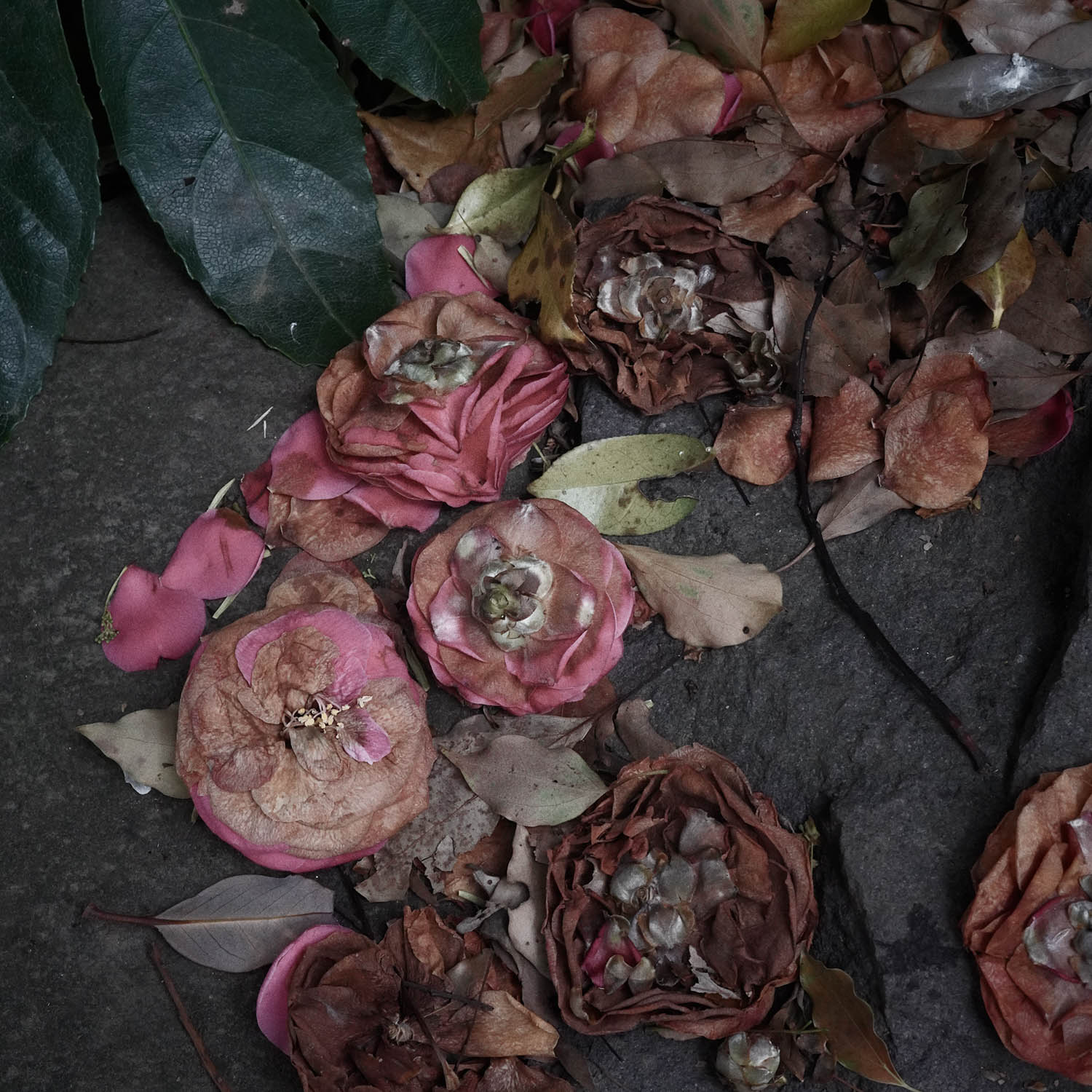
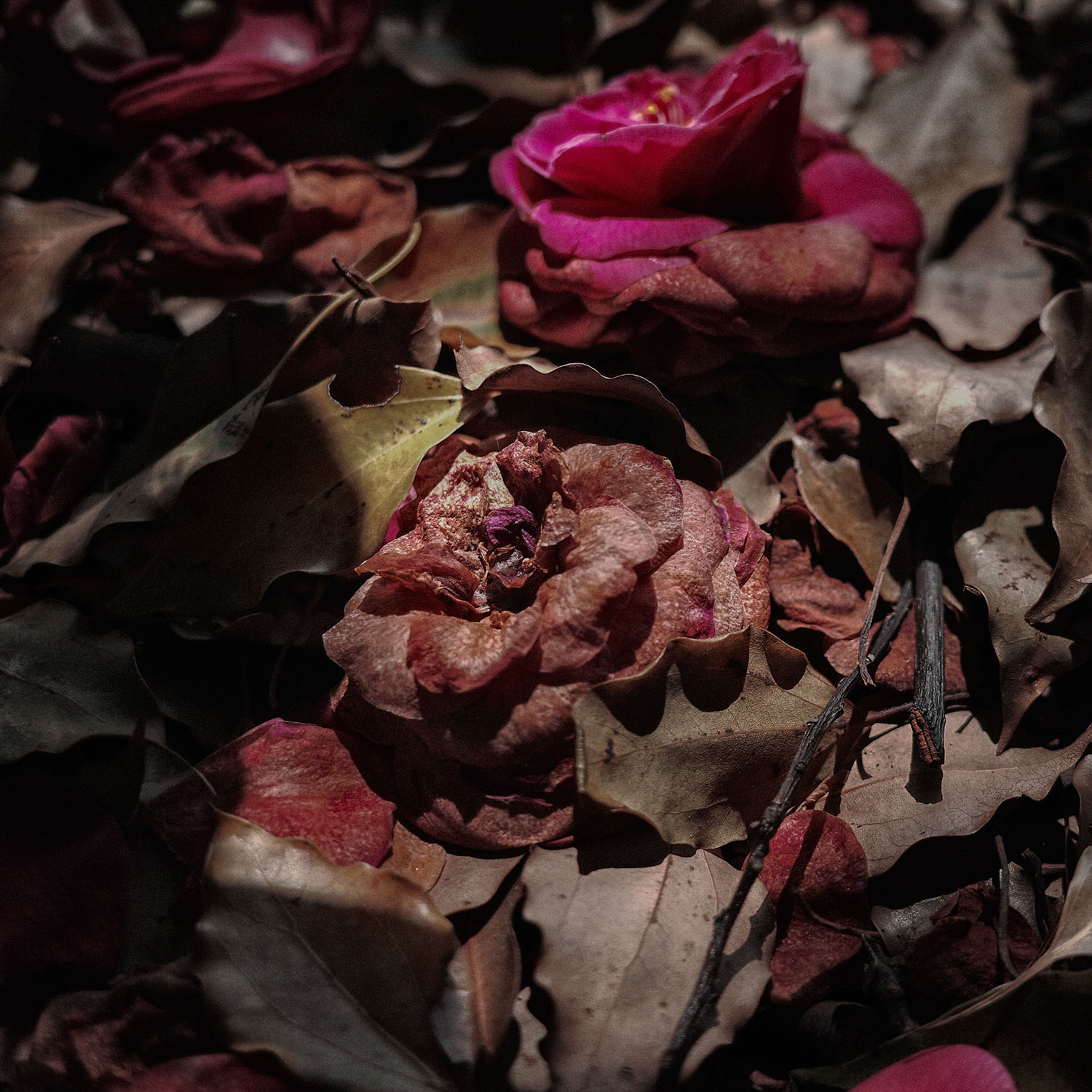
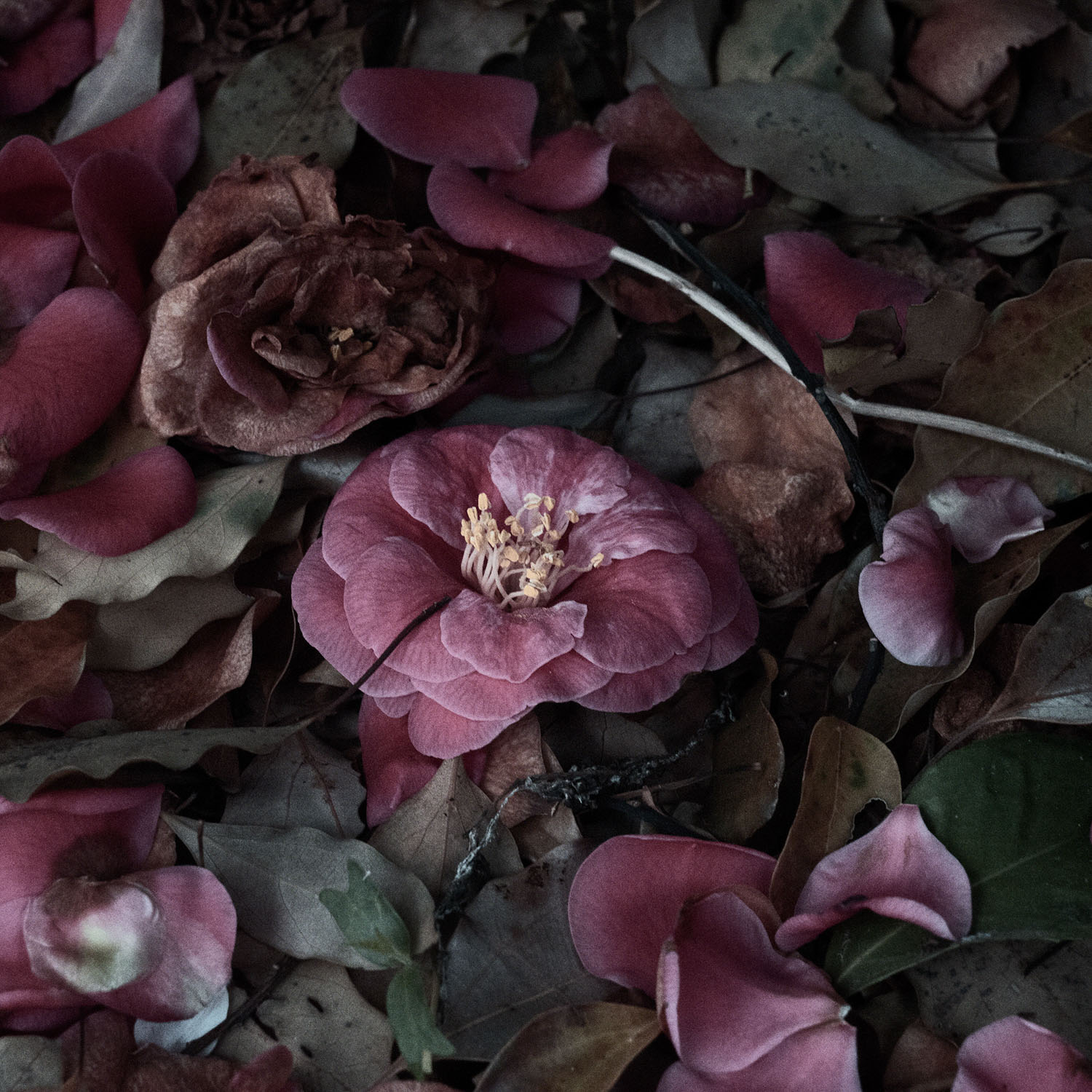
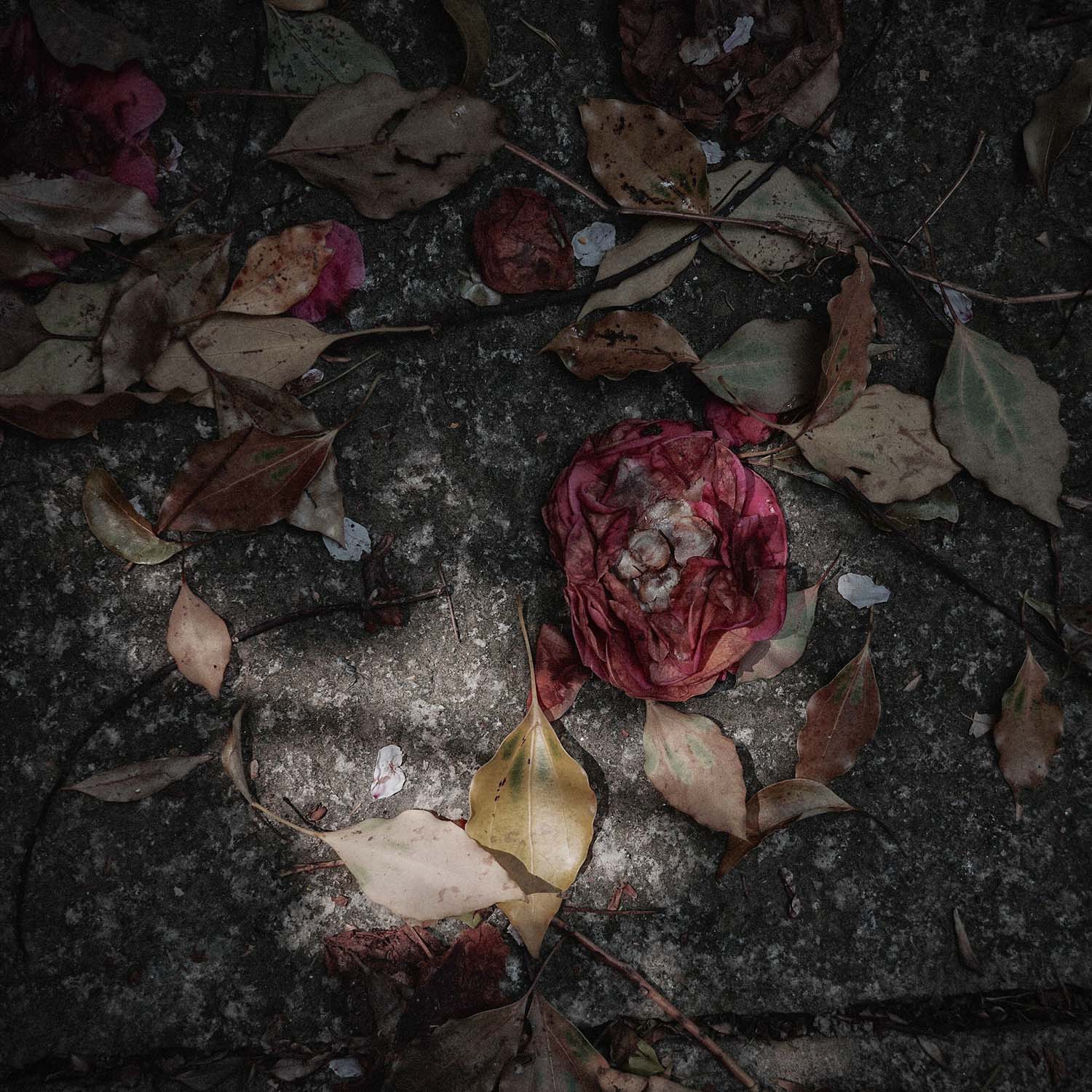
冬が終わり大地にひっそりと横たわる一輪の椿。枝先で艶やかに咲き誇ったその花はやがて落ち静かに朽ちてゆく。散り敷かれた花弁はやがて褐色を帯び、滲んだ細かな皺を刻みそれは時間の重みを身にまとうようだ。椿は枝の上で強い生命の赤を見せる一方で、落花を通じて無常と滅びの美しさを見せる2面性を持っており古来より作家、芸術家はその2面性に注目してきた。
本作品は花としての完璧な姿ではなく、朽ちてゆく椿に深く寄り添う。赤く染まった花びらは血のかたまりにも似て死を連想させる。しかし同時に朽ちる過程の中にこそ宿る繊細な色彩と質感が艶やかなまでの美しさを放つ。朽葉と混ざり合うその色の層は生と死の境界線を曖昧にし、我々の視覚と感情に強く問いかけてくる。
朽ちゆく椿を作品とすることは生命の盛衰を見つめることであり、その一連の観察は無常あるいは、そこに潜む美を再認識することに他ならない。
As winter draws to a close, a single camellia lies quietly on the ground. The flower that once blazed in full bloom at the tip of its branch has fallen, and slowly begins to decay. Its petals, scattered across the earth, gradually take on a brownish hue, creasing into fine, blurred wrinkles — as though bearing the weight of time itself. The camellia holds a duality that has long captivated writers and artists alike: on the branch, it burns with the fierce red of life; in its fall, it reveals the beauty of impermanence and dissolution. This body of work turns not toward the camellia at its most perfect, but toward the flower in its decay. The deep-stained petals, red as clotted blood, carry an unmistakable suggestion of death. And yet it is precisely within the process of decay that a delicate beauty emerges — subtle shifts of color and texture radiating a kind of dark radiance. Where fallen petals mingle with dead leaves, the layering of tones blurs the boundary between life and death, pressing quietly but forcefully against both eye and emotion. To make art of the decaying camellia is to gaze steadily at the rise and fall of living things. That sustained act of looking is, in the end, nothing other than a reawakening to impermanence — and to the beauty that lies quietly within it.